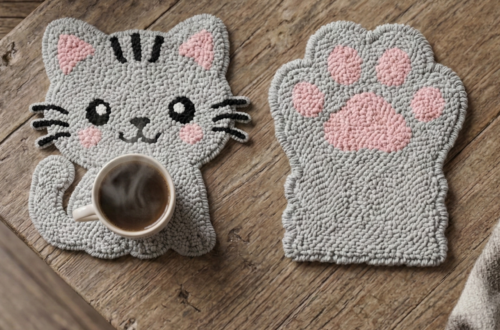
Punch Needle Fabrics: The Best 4 Options for Your Projects
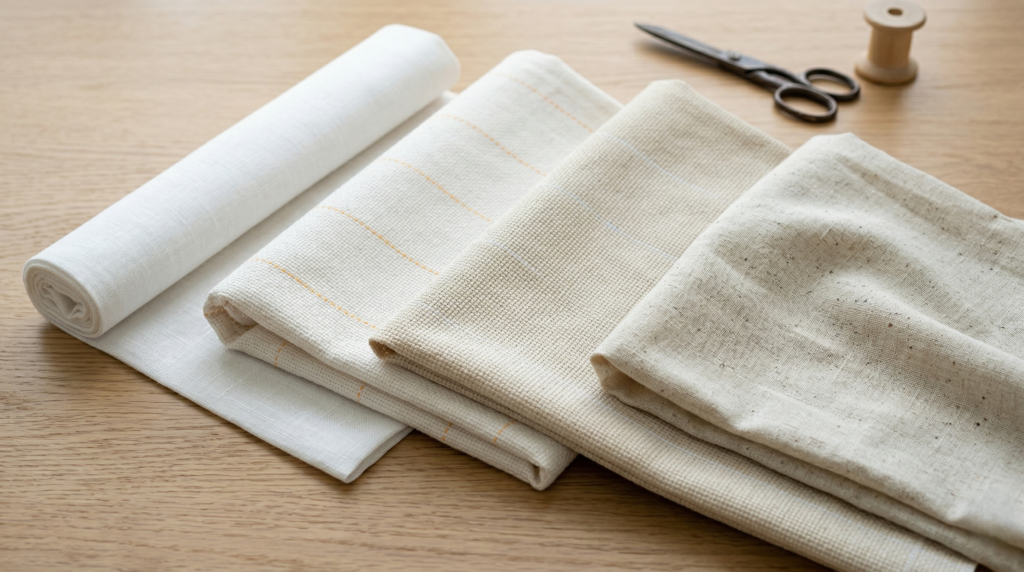
One of the most common questions from beginners is: “Does fabric choice really matter that much?” The answer is absolutely yes! The right fabric lets your needle move smoothly, helps your loops sit evenly, and directly affects the quality of your finished piece. Working with the wrong fabric can be frustrating — and a real waste of time.
In this post, I’ve rounded up the 4 most popular fabrics used in punch needle embroidery, along with their strengths. Once you know which fabric works best for which project, you’ll approach every new piece with so much more confidence! 🧵
🌟 Monk’s Cloth — The World Standard
Monk’s Cloth holds a special place in the punch needle world. Whether you’re working with medium-weight threads or thick yarns, fine needles or large ones, this fabric handles it all beautifully — which is exactly why it’s considered the gold standard worldwide.
Why is it so popular? Its open, flexible weave allows the needle to move freely through the fabric. If you make a mistake, you can easily pull out the loops and start again — the fabric bounces back and leaves no trace. This gives you an incredible sense of freedom, especially on large, ambitious projects.
Loved by punch needle artists around the world, Monk’s Cloth is particularly ideal for decorative wall hangings, pillow covers, and large-scale work.
⭐ Cotton Calico — My Personal Favorite
I use this fabric in the vast majority of my own projects — and for good reason. In terms of value for money, it’s truly a punch needle artist’s best friend.
Why do I love it? It’s affordable and easy to find. It provides an excellent base for fine to medium needles, gripping loops firmly so they don’t slip — which makes a huge difference in detailed designs.
Its weave is tight enough to prevent your yarn from pulling back through, so your loops stay right where you place them. It works beautifully for both beginner projects and intermediate-level work.
💡 Pro tip: When stretching Cotton Calico on your frame, avoid over-tightening. Keeping the fabric’s natural structure intact actually improves loop retention.
🔧 Primary Tufting Cloth — A Surprising Option
Primary Tufting Cloth was originally made for tufting machines — but when used with thicker needles, it can produce beautiful results in punch needle embroidery too.
When should you consider it? If you’re going for a dense, textured, rug-like surface, this fabric is a solid alternative. Its structure is sturdy and it holds up well under tension. It’s especially worth considering for bold, tactile projects where you want a lot of dimension.
That said, it’s not the best match for fine or medium needles — for the best results, pair it with thick yarn and a large needle.
💡 Pro tip: If it’s your first time using this fabric, start with a small test piece. The feel is a bit different from what you might be used to.
✨ Weaver’s Cloth — For Detail Lovers
Weaver’s Cloth looks similar to American Monk Cloth at first glance, but it has a much finer, tighter weave. It’s specifically designed for intricate, high-precision embroidery work.
Who is it ideal for? If you’re working on small, detail-rich designs — think miniature figures, fine-line lettering, or delicate geometric patterns — Weaver’s Cloth gives you far more control and precision than other fabrics. Your fine needle moves exactly where you want it, resulting in crisp, clean edges and a polished, professional finish.
💡 Pro tip: Weaver’s Cloth can be a little pricier, but the results are worth it. Before buying, pay attention to dimensions and seam allowance.
🧵 Which Fabric Should I Choose?
| Fabric | Best for | Needle size |
|---|---|---|
| Cotton Calico | General projects, beginners | Fine – Medium |
| Monk’s Cloth | Large projects, yarn work | Medium – Thick |
| Primary Tufting Cloth | Dense, textured surfaces | Thick |
| Weaver’s Cloth | Detailed, precision designs | Fine |
🔍 How to Test Your Fabric
Got a piece of fabric at home and not sure if it works? Try this quick “needle test”:
- Stretch the fabric tightly in your hoop.
- Push your needle through. If it cuts the threads or requires a lot of force, the weave is too tight.
- Pull the needle back out. If the hole “heals” (the threads slide back into place) when you rub it with your finger, that fabric is perfect for punch needle!
Final Thoughts
Choosing the right fabric in punch needle is just as important as a painter choosing the right canvas. Each fabric has its own character — and over time, you’ll develop an instinct for which one suits each project best.
If you’re just starting out, Cotton Calico is always a safe and reliable first choice. When you’re ready, don’t hesitate to try the others too!
Want to explore punch needle patterns to go with your new fabric?
📌 Frequently Asked Questions
Can I use regular cotton fabric?
Sadly, no. Regular quilting cotton is too tight. The needle will just punch holes in the fabric rather than sliding through the weave.
How do I stop my fabric from fraying?
I always use masking tape! Just fold a strip over the raw edges of your fabric before you put it in the hoop. It takes two minutes and saves a lot of mess.
Where can I buy these?
Etsy and Amazon are great places to find Monk’s Cloth and Weavers Cloth.


You May Also Like
You’re Done Stitching — Now What? 🎉 Finishing Your Punch Needle Project
Punch Needle Supplies for Beginners: Everything You Need to Get Started